Correct the cause
Identify who will stop the plumbing leak, close the roof opening, correct drainage, or address the moisture source. Confirm whether that work is included or requires a separate specialist.

Fire damage
A North Alabama homeowner guide to safe-entry authorization, emergency stabilization, suppression-water cleanup, contents, soot, demolition, and rebuilding scopes after a fire.
Call for fire-damage help · (904) 938-4226This line is for fire-damage help. It may connect you with an independent participating provider. Availability varies by location and damage type. The publisher may be compensated for a qualifying call.
Independent guide. Service availability depends on the property location and the type of damage.
Do not enter until fire or building authorities say the property is safe. Preserve the incident record, photograph conditions before moving items, and separate emergency stabilization, contents work, cleaning, structural repair, and rebuilding.
Call for fire-damage help · (904) 938-4226This line is for fire-damage help. It may connect you with an independent participating provider. Availability varies by location and damage type. The publisher may be compensated for a qualifying call.Compare the scope
Identify who will stop the plumbing leak, close the roof opening, correct drainage, or address the moisture source. Confirm whether that work is included or requires a separate specialist.
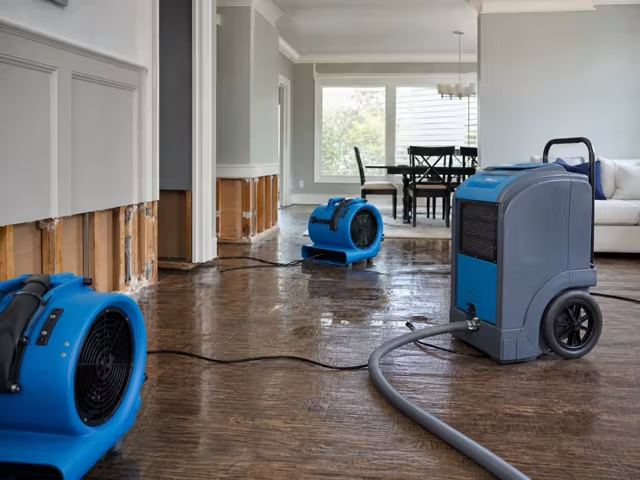
Ask what will be extracted, removed, cleaned, contained, dried, or monitored; which equipment is planned; and how changing conditions will be documented.
Before finishes return, request completion evidence appropriate to the job, such as moisture readings, photographs, cleaning records, or a written explanation of materials removed and retained.
Written scope
Fire restoration begins after authorities clear access. The written plan should separate emergency stabilization, structural and electrical hazards, suppression-water cleanup, contents handling, material removal, and reconstruction.
Common questions
Life safety and official access restrictions come first. After authorities permit entry, document openings, utilities, structural concerns, suppression water, affected rooms, and contents before broad cleanup or demolition begins.
Suppression water can affect floors, walls, insulation, cabinets, contents, and rooms below the fire area. Ask whether extraction, moisture mapping, drying, material removal, and final readings are included in the fire-restoration scope.
Compare emergency stabilization, fire and heat damage, suppression-water mitigation, soot or smoke cleaning, contents, demolition, permits, reconstruction, and exclusions as separate line items even when one provider coordinates them.
Related decisions
Reference points
Federal recovery guidance covering the first day, insurance records, property, documents, and salvage decisions.
Federal exposure and cleanup guidance for smoke and ash, including protective clothing, respirators, and methods that avoid stirring particles into the air.
State consumer guidance for checking licensing, references, insurance, written scope, and payment terms.