Correct the cause
Identify who will stop the plumbing leak, close the roof opening, correct drainage, or address the moisture source. Confirm whether that work is included or requires a separate specialist.

Water damage
Extraction, drying, cleanup, and moisture documentation after indoor water damage.
Independent guide. Service availability depends on the property location and the type of damage.
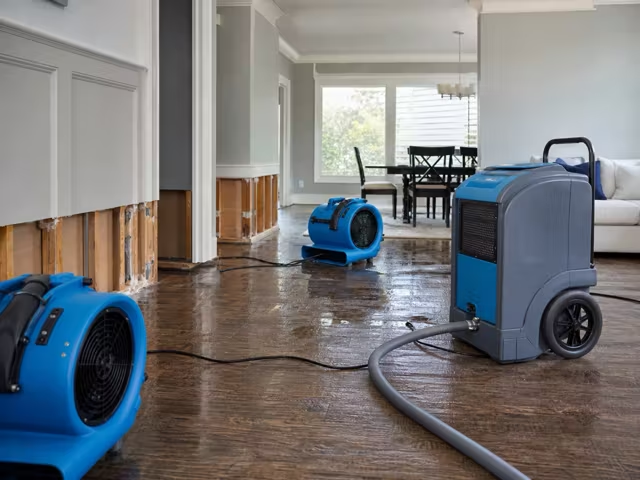
Stop the source when it is safe, document affected rooms, remove standing water, and confirm that hidden materials are drying, not just the visible surface.
Compare the scope
Identify who will stop the plumbing leak, close the roof opening, correct drainage, or address the moisture source. Confirm whether that work is included or requires a separate specialist.
Ask what will be extracted, removed, cleaned, contained, dried, or monitored; which equipment is planned; and how changing conditions will be documented.
Before finishes return, request completion evidence appropriate to the job, such as moisture readings, photographs, cleaning records, or a written explanation of materials removed and retained.
Written scope
A complete drying scope identifies the source, water category, affected rooms, material layers, hidden cavities, equipment plan, monitoring schedule, and the evidence required before reconstruction.
Related decisions
Reference points
Federal homeowner guidance on moisture control, drying, porous materials, and mold cleanup.
Address-level flood-hazard research; the map does not determine insurance coverage or diagnose a property.
State consumer guidance for checking licensing, references, insurance, written scope, and payment terms.